A dull, scuffed floor changes how a space feels before anyone notices the dust on a desk or the shine on a countertop. In a busy New York office, medical practice, school, retail store, or apartment building, worn floor finish can make an otherwise clean environment look neglected. Professional floor stripping waxing restores the protective layer that daily mopping cannot replace, helping hard floors look cared for and stand up to constant foot traffic.
This is not simply a cosmetic service. Done correctly, stripping and waxing can extend the usable life of resilient flooring, support safer walking conditions, and make regular maintenance more effective. Done poorly, it can leave residue, uneven gloss, sticky areas, or damage to the floor itself. That is why the process, products, equipment, and crew experience matter.
What Floor Stripping and Waxing Actually Does
Many commercial and residential hard floors have a finish, also called floor wax, that sits above the flooring material. This clear protective coating takes the everyday damage from shoes, rolling chairs, carts, spills, grit, and repeated cleaning. Over time, that coating becomes scratched, yellowed, cloudy, or worn away in traffic lanes.
Floor stripping removes the old layers of finish and the embedded soil trapped within them. After the floor is cleaned, neutralized, and completely dry, technicians apply new, even coats of commercial-grade finish. The result is a cleaner-looking surface with a renewed protective barrier.
The service is commonly used on vinyl composition tile (VCT), luxury vinyl tile where manufacturer guidance permits it, linoleum, terrazzo, and certain other resilient surfaces. It is not a universal solution for every hard floor. Natural stone, unfinished wood, laminate, and some newer factory-finished flooring require different care. Applying wax where it does not belong can create a slippery surface or interfere with the material's finish, so identifying the floor type comes first.
When Your Floors Need Stripping and Waxing
The clearest sign is often visible traffic patterns. Entrances, hallways, reception areas, elevators, break rooms, and checkout lanes may look gray or dull even after mopping. That usually means soil has become embedded in a worn finish rather than sitting on the surface.
Other signs include persistent scuff marks, a yellow or uneven appearance, peeling finish, stains that no longer lift with routine cleaning, and floors that look different from one section to the next. In healthcare offices and schools, a compromised finish can also make it harder to maintain a visibly clean environment for patients, families, staff, and students.
Timing depends on traffic, soil exposure, flooring material, and maintenance practices. A busy Manhattan lobby may need a full service more often than a lightly used office suite. Some facilities benefit from scheduled stripping and waxing every six to twelve months, while others can preserve the finish longer with routine burnishing, scrub-and-recoat service, entry mats, and prompt spill cleanup.
A full strip is not always the right answer. If the existing finish is still stable and only the top layer is scratched, a deep scrub and recoat may restore the appearance with less downtime and less disruption. A professional assessment helps avoid paying for more work than the floor needs.
The Professional Floor Stripping Waxing Process
A dependable service begins with preparation. Furniture, movable equipment, and floor obstacles are addressed before work starts, and technicians identify areas that need special attention. In occupied facilities, clear scheduling and safety planning are essential. Floors may need to remain closed until the finish is fully dry and cured.
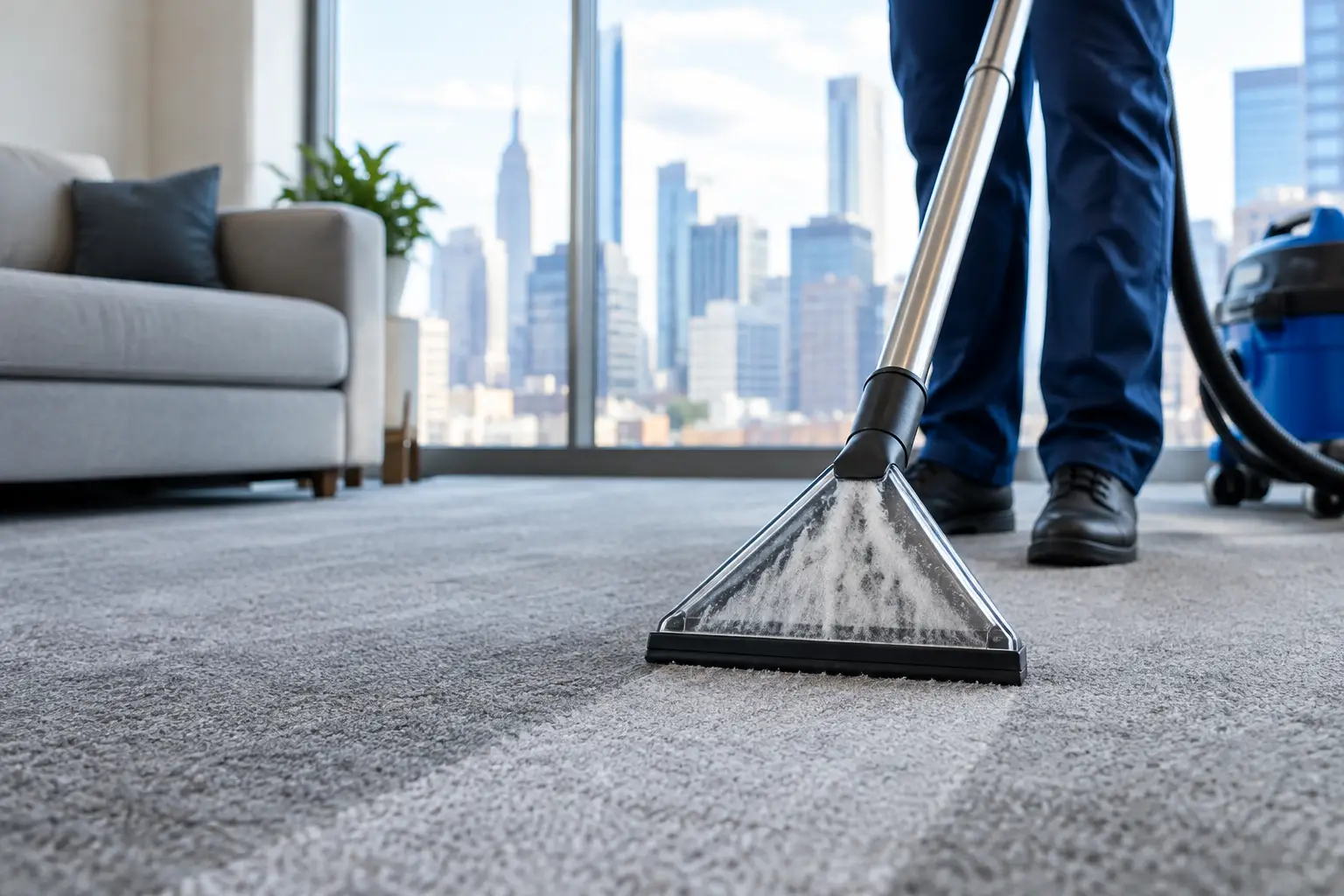
The stripping solution is then applied in controlled sections. It must dwell long enough to loosen the old finish without drying on the floor. Technicians use appropriate pads or machines to agitate the surface, then remove the slurry completely with professional extraction equipment. Corners, baseboards, and edges require detailed hand work because residue left behind can show through the new finish.
After stripping, the floor is rinsed and neutralized according to the product and flooring requirements. This step is easy to overlook, but it is critical. Any remaining chemical residue can prevent new wax from bonding properly, leading to peeling or an uneven appearance.
Once the floor is fully dry, new finish is applied in thin, consistent coats. Several coats are typically needed, with drying time between applications. Rushing this stage can trap moisture or leave marks in the finish. A trained crew will also follow product instructions and account for temperature, humidity, ventilation, and site conditions.
The final result should look even across the entire area, including edges and high-traffic zones. Just as important, the floor should be left ready for practical daily maintenance, not merely polished for one day.
Why Skilled Service Matters in Occupied Spaces
Floor work can affect normal operations. A medical office may need treatment after patient hours. A retail space may need work completed overnight. Schools, daycares, gyms, and religious facilities may need scheduling around classes, events, and community use.
The right cleaning provider plans for those realities. That includes protecting adjacent surfaces, placing clear wet-floor signage, managing equipment safely, controlling access to work areas, and communicating realistic dry times. It also means using trained, insured, and background-checked employees who understand how to work professionally around staff, visitors, patients, children, and residents.
Product selection matters as well. Strong stripping chemicals may be necessary for heavy buildup, but they should be used carefully and according to the floor and facility requirements. Green Seal-certified cleaning products can support healthier day-to-day maintenance where appropriate, while specialty floor products should be selected for performance and compatibility rather than marketing claims alone.
For facility managers, consistency is part of the value. An accountable crew documents the condition of the floor, recognizes recurring problem areas, and recommends a maintenance schedule that fits the building rather than selling a one-size-fits-all package.
Protecting the New Finish Between Services
New wax will not stay bright without a practical maintenance plan. Grit is one of the biggest threats to floor finish, especially during wet New York weather. Entry mats should be cleaned regularly and replaced when they no longer trap dirt effectively. Daily dust mopping or vacuuming removes abrasive particles before they are ground into the surface.
Use a neutral cleaner designed for finished floors, not an overly harsh degreaser or household product that can dull the coating. Clean spills promptly, especially around break rooms, reception desks, and entrances. High-traffic areas may also benefit from periodic burnishing or a targeted scrub and recoat before the finish wears down to the flooring material.
Furniture pads, chair mats, and protective measures for rolling carts can reduce scratches in offices and common areas. These small steps often extend the life of the finish and reduce how often a full strip is needed.
Questions to Ask Before Scheduling Service
Before approving floor work, ask what type of flooring you have, whether stripping is necessary or a recoat is enough, and how long the space must remain off limits. You should also ask how the crew will protect nearby areas, what finish will be used, and what daily maintenance is recommended afterward.
Transparent pricing should account for the floor's condition, square footage, layout, access, furniture moving, and scheduling requirements. A low quote that ignores preparation, drying time, edge work, or proper extraction can lead to uneven results and a shorter-lasting finish.
City Wide Cleaning provides floor care with employee-based crews, professional equipment, and scheduling designed around the demands of New York and Long Island properties. For a facility that needs reliable upkeep without added vendor management, a clear assessment is the best place to start.
A floor does not need to look brand-new to be well maintained. It needs the right level of care at the right time - protecting the surface, supporting a clean impression, and keeping the people who use the space moving comfortably through it.