A Manhattan workplace can look fine at 9 a.m. and feel neglected by 3 p.m. Elevator traffic brings in grit, shared kitchens collect spills, restrooms need attention, and reception areas become a constant first impression. Commercial cleaning Manhattan businesses choose should account for that pace with a plan built around the actual people, surfaces, and hours in the building.
A cleaning provider is not simply there to empty bins and run a vacuum. For an office manager, practice administrator, retail owner, or facilities leader, the right team reduces daily friction. Staff can work in a cleaner environment, visitors see a well-kept space, and the person responsible for the building is not left chasing missed tasks or unclear invoices.
What Commercial Cleaning in Manhattan Should Cover
The best cleaning schedule starts with how a space is used, not with a generic checklist. A small professional office with hybrid staff may need service a few evenings each week. A busy medical office, gym, school, restaurant, or high-traffic retail location may require daily cleaning and more frequent attention to touchpoints and restrooms.
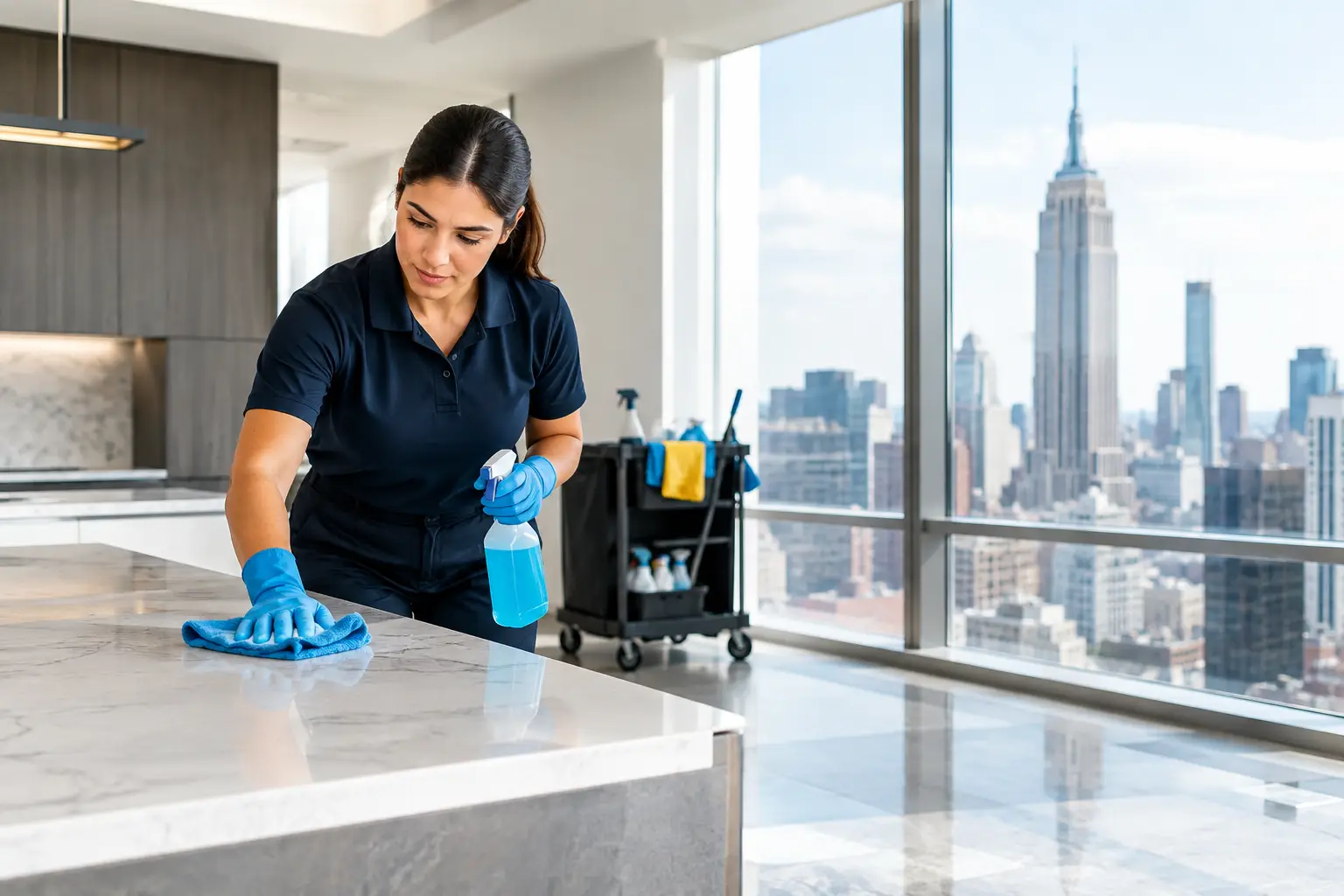
Recurring janitorial service commonly includes dusting accessible surfaces, vacuuming carpets and rugs, mopping hard floors, removing trash and recycling, cleaning restrooms, and wiping down breakroom areas. In client-facing businesses, entry glass, reception furniture, fixtures, and visible corners matter just as much as the floor. A clean lobby signals care before a customer or patient speaks to anyone.
The scope should also identify the areas that need special attention. In a dental office, that may mean disinfecting nonclinical high-touch surfaces according to the practice's needs. In a daycare, it may mean safe cleaning products and careful attention to shared tables, restrooms, and entryways. In a warehouse, it may mean dust control, breakroom care, and hard-floor maintenance that works around operations.
A dependable provider walks the space, asks about traffic patterns and priorities, and puts the agreed work in writing. That prevents the common gap between what a customer assumed was included and what a crew was told to do.
Why the Cleaning Team Matters as Much as the Checklist
Manhattan buildings have their own operating realities. There may be security procedures, freight elevator windows, limited loading access, building management rules, or tenants working late. A cleaning company needs people who arrive prepared, understand the site requirements, and can work respectfully around staff, patients, students, guests, and residents.
That is why the structure behind the service matters. A provider using trained, background-checked, insured, and bonded employees offers a clearer line of accountability than a rotating group of unknown subcontractors. Consistent crews also learn the details of a property: where supplies are stored, which rooms require extra care, when the building is busiest, and what a manager considers nonnegotiable.
No cleaning company can promise that a concern will never arise. What matters is how quickly and clearly it is handled. A local support team, documented service expectations, and direct responsibility for the crew make it easier to resolve an issue before it becomes a pattern.
Build a Schedule Around Traffic, Not Guesswork
Cleaning frequency should reflect the condition you need to maintain between visits. A once-a-week service can work for a low-occupancy office with limited public traffic. It is usually not enough for a crowded workplace with daily visitors, food service, shared restrooms, or heavy street-level foot traffic.
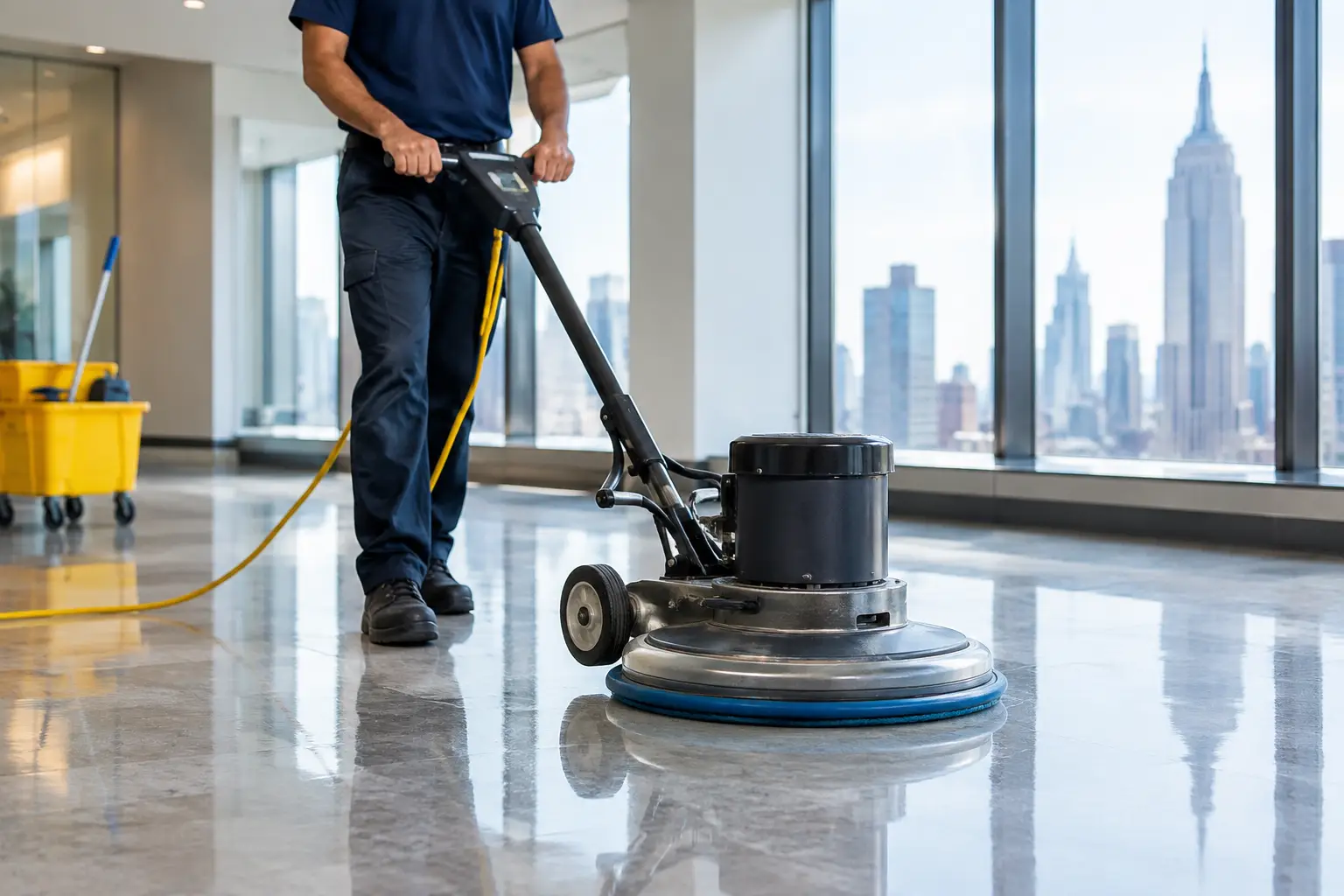
Daily or multiple-times-per-week cleaning is often the better fit for offices, schools, healthcare settings, fitness centers, hospitality venues, and retail locations. Restrooms, breakrooms, entrances, and shared touchpoints benefit most from regular care. Floors should also be evaluated honestly: a clean floor that is visibly scuffed, stained, or dull may need periodic restoration rather than another round of routine mopping.
Scheduling is equally important. Evening cleaning can keep crews out of the way of employees and customers. Day porter service can be useful where restrooms, spills, and public areas need ongoing attention. Some spaces need a combination, with nightly cleaning supported by daytime checks during busy periods.
A practical plan can include routine tasks, periodic deep cleaning, and a clear process for one-time needs. Post-construction cleanup, carpet extraction, hard-floor stripping and waxing, and disinfection services should not be treated as last-minute fixes when they can be planned around the life of the facility.
Health-Conscious Cleaning Without Disrupting Operations
Cleaning is closely tied to how people feel in a space. Employees notice dusty workstations and overflowing trash. Patients and parents notice restroom conditions. Guests notice odors, smudged glass, and debris near an entrance. These details influence comfort and confidence, even when no one says so directly.
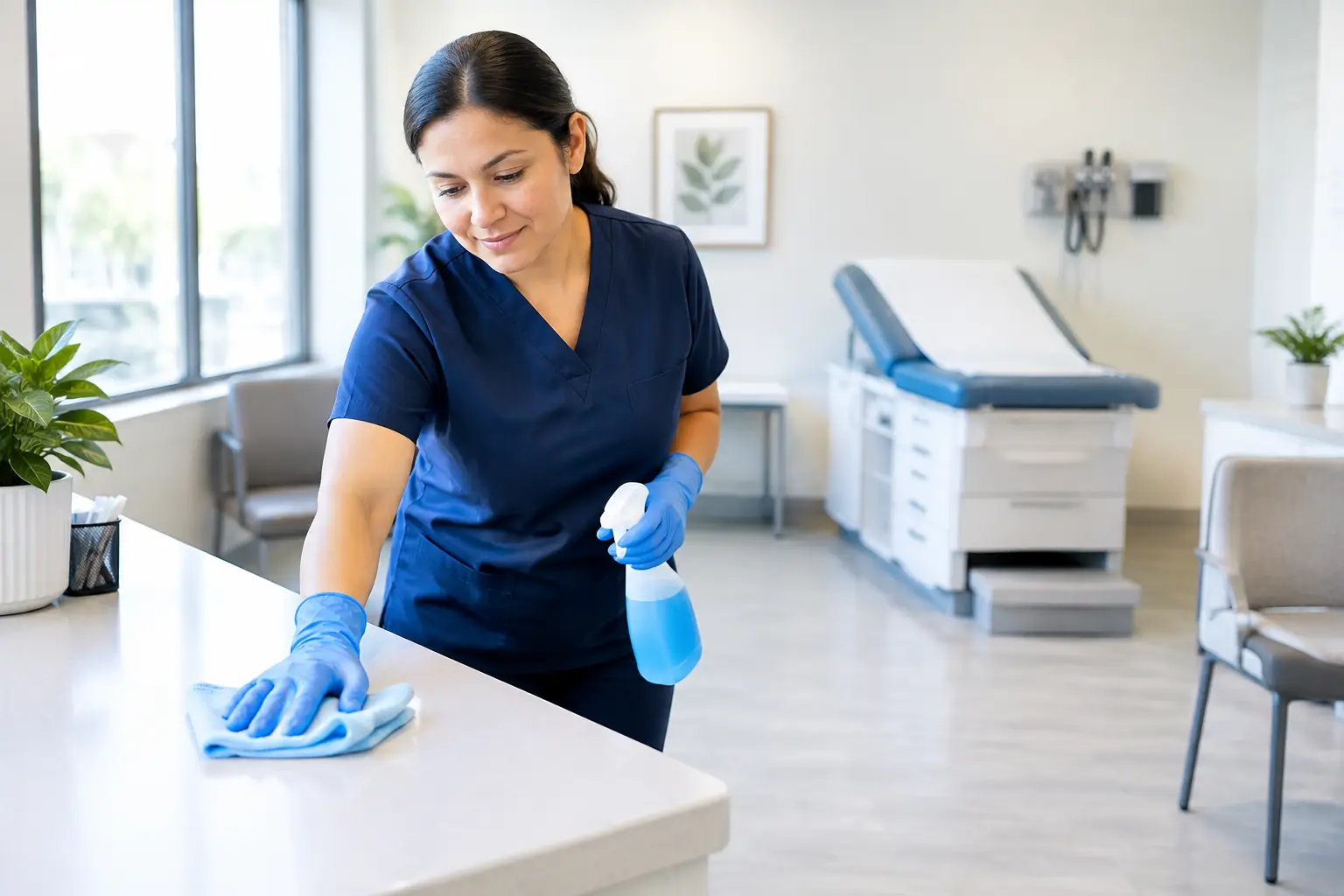
Health-conscious service focuses on more than appearance. High-touch areas such as door handles, elevator buttons, shared counters, light switches, and restroom fixtures need regular attention. Disinfection should be used thoughtfully, with the right products and procedures for the environment. A medical or childcare setting may have different expectations than a standard corporate office, and the cleaning plan should reflect that difference.
Product selection matters, too. Green Seal-certified, non-toxic products can support a cleaner environment for staff, customers, children, and pets while still delivering professional results. However, eco-friendly products should not be a vague label. Ask what products are used, how they are applied, and whether the team brings the necessary equipment and supplies.
Questions to Ask Before Hiring a Cleaning Company
A quote is more useful when it is connected to a defined scope of work. Before selecting a provider, ask whether the price includes labor, supplies, equipment, and any building-specific requirements. Confirm the service frequency, cleaning hours, access process, and who will be contacted if a request comes up.
It also helps to ask whether technicians are employees, whether they are insured and background-checked, and how quality is monitored. These questions are not administrative details. They affect security, consistency, and how much time your staff will spend managing the relationship.
For specialty needs, ask direct questions about experience and equipment. Carpet extraction requires more than routine vacuuming. Hard-floor stripping and waxing require careful preparation and the right products for the floor type. Post-renovation cleaning requires a method for addressing fine construction dust, adhesive residue, and debris without damaging finished surfaces.
Price should be transparent, but the lowest quote is not always the lowest operating cost. A cheaper service that misses visits, uses unfamiliar crews, or leaves your team to manage complaints can cost more in staff time and customer perception. Compare providers based on scope, accountability, qualifications, and communication - not only the monthly number.
A Clear Start Makes Ongoing Service Easier
A strong commercial cleaning relationship begins with a site-specific conversation. The provider should learn what type of facility you operate, how many people use it, what hours are practical, and which areas create the most concern. From there, the scope, schedule, and pricing should be straightforward.
City Wide Cleaning provides commercial cleaning for Manhattan organizations that need trained employee teams, professional-grade equipment, flexible scheduling, and clear service expectations. The goal is simple: a clean space that supports the people who work, visit, learn, heal, shop, or gather there.
When your cleaning plan reflects the real demands of your facility, cleanliness stops being another item your team has to chase. It becomes a reliable part of how your space is cared for each day.